

A Complete Guide on How to Build and Deploy ERC-721 Token
NFTs are taking the crypto world by storm, forcing blockchain developers and crypto enthusiasts to explore this new lucrative possibility. Unlike cryptocurrencies, NFTs built using the Ethereum ERC-721 standard are non-fungible, meaning that they cannot be split into fractions and used as means of exchange. However, NFTs are a powerful source of profitability and can serve as valuable means of investment and trading.
Thus, the 4IRE team explores the basics of ERC-721 token creation in this article to help you understand the mechanics of this process better, embrace the requirements for a workable ERC-721 token, and consider the opportunity of your own token creation for monetization of a blockchain project.
What Is an ERC, After All?
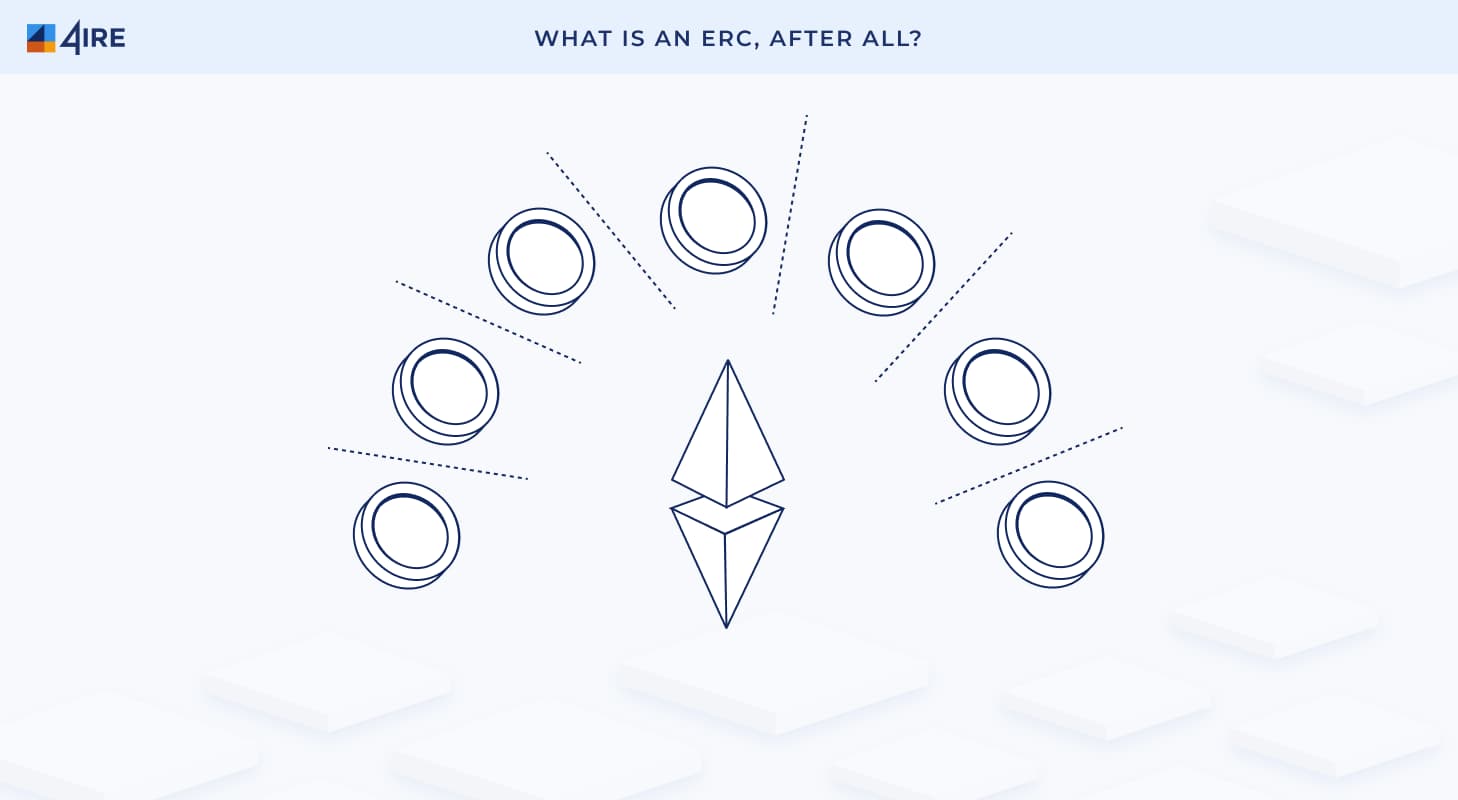
ERC, which is an acronym for Ethereum Request for Comment, was launched by the Ethereum network in 2015. Given that any transaction in blockchain platforms can take place only after its validation by authorized nodes, it is critical to create ERC-compliant tokens within any new blockchain ecosystem. Thus, most cryptocurrencies operating based on Ethereum were created using the variety of ERC standards that this network supports and understands.
Overall, there are tons of other ERC standards that a layperson might not need, while a blockchain coder should know for sure to create workable, flexible tokenization solutions.
For instance, blockchain coders can generate cryptocurrencies – standard fungible tokens that can be used as means of financial exchange on the market – with the help of ERC-20. The ERC-223 standard is used in smart contract creation to protect users from accidental transfers, while the ERC-721 standard is fitted explicitly for generating non-fungible tokens, like NFTs. The ERC-809 renting standard is applied with a rival, non-fungible tokens, and the ERC-864 standard is used for creating and managing shared ownership of NFTs.
Introduction to ERC-721 Tokens
Counter to ERC-20 tokens that do not possess any unique properties (meaning you can exchange, for instance, five SUSHI coins for a BUSD coin, and each coin possesses the same value as any other SUSHI or BUSD coin does), ERC-721 tokens are unique. Each token has an individual set of properties and a specific value associated with it. Thus, by employing the ERC-721 standard, coders can interact with NFTs in a variety of ways:
- Locate the ERC-721 token owner’s address
- Confirming the transfer of tokens from one owner to another
- Checking the addresses approved for the ERC-721 transfer
- Completing the actual transfer of the token
Where Are ERC-721 Tokens Used?
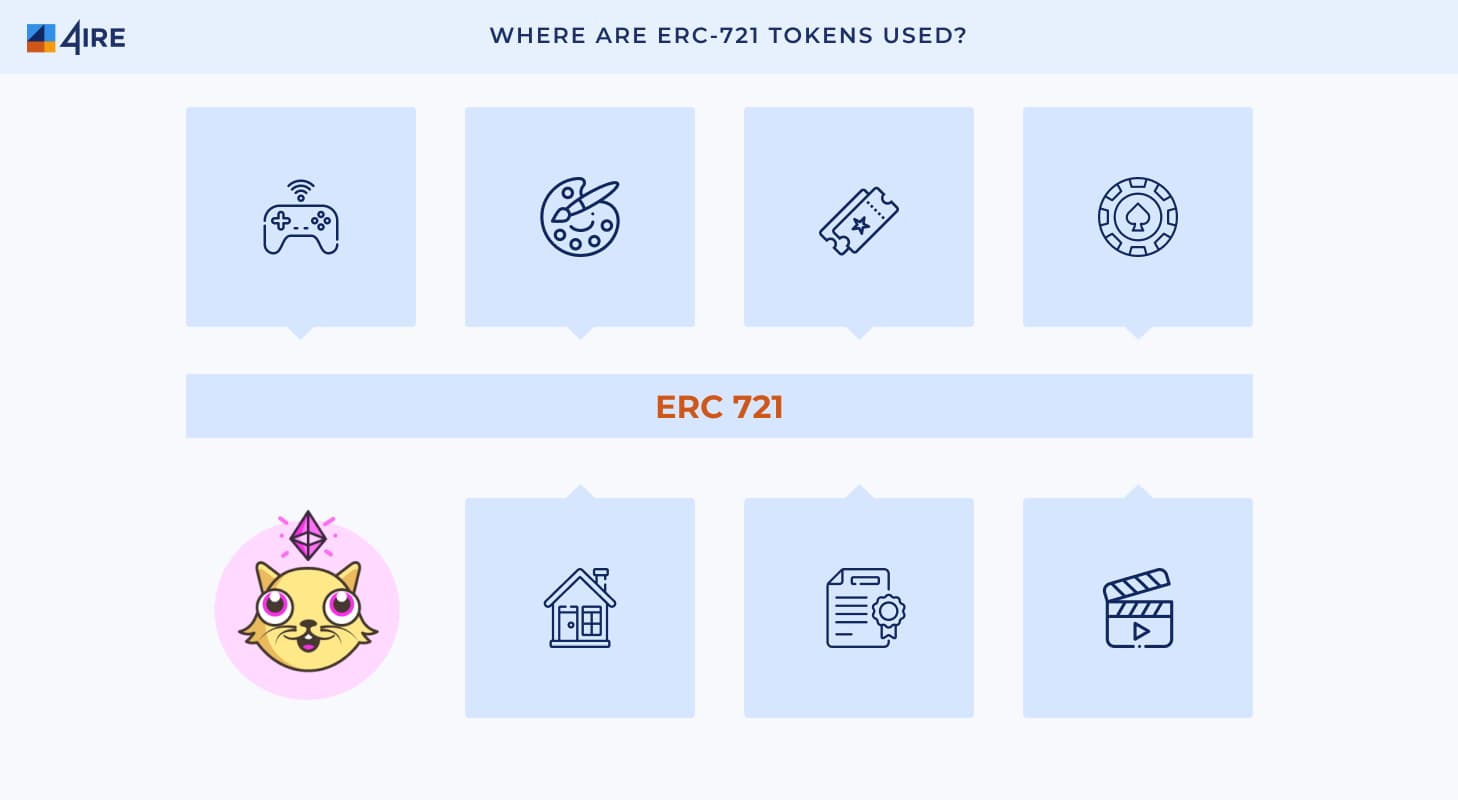
Because of the unique nature of NFTs and their functioning as non-interchangeable assets, they have found application in numerous industries to date:
- Gaming
Numerous games are now equipped with ERC-721 gaming items, such as armor, accessories, and other unique assets gamers are awarded after covering specific challenges. NFTs offer safer ways for users to exchange, trade, and store assets.
- Collectibles
Another sphere of NFT use is the collectibles industry. Coders create unique pictures of animals, visual art, collections of cards, etc., to trade them on NFT marketplaces.
- VR real estate
NFTs can also take the form of VR simulations. Coders create entire simulated worlds and universes or mimic actual buildings and architectural systems in the form of ERC-721 tokens. Such assets are also potentially attractive as investments as they are actively traded among gaming and non-gaming enthusiasts.
ERC-20 versus ERC-721
For several years, the ERC-20 standard has been widespread for building tokens used in dApps. This standard is the default one for uniform, interchangeable, and divisible assets, also referred to as fungible. In a nutshell, fungible assets have to function as an analog of fiat currency, meaning that you can use the asset or its fractions to exchange them for other cryptocurrencies or valuable assets. The most widespread examples of ERC-20 tokens include cryptocurrencies like ETH and a massive number of altcoins like LINK, USDT, WBTC, etc.
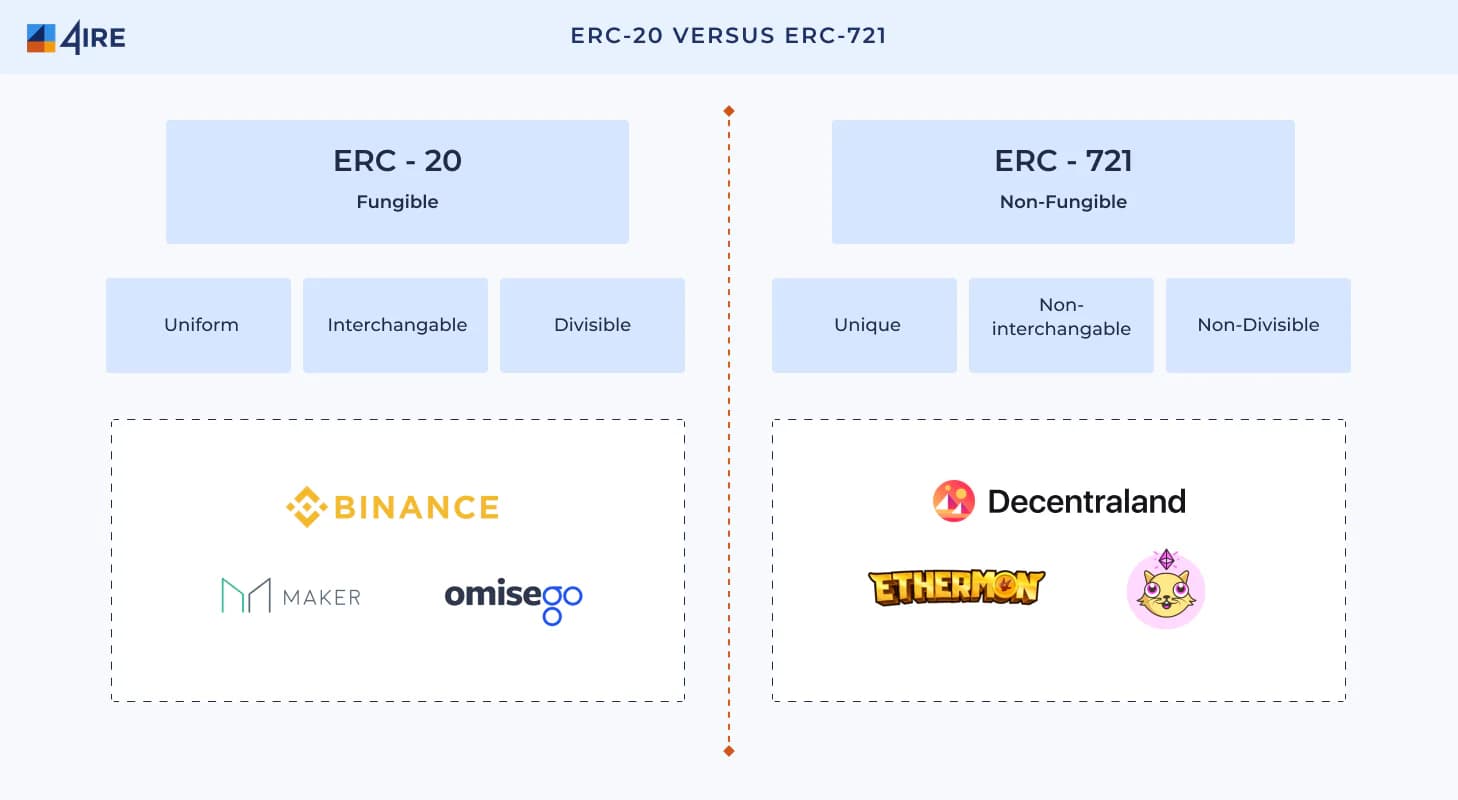
In contrast with ERC-20, the ERC-721 standard was developed for creating non-fungible crypto assets (NFTs). Their primary feature distinguishing them from altcoins is their unique, non-divisible nature. It means that each NFT cannot be divided into bits and can be traded only as a whole, not in parts (though there are newer ERC standards to support shared ownership of NFTs).
ERC-721 Optional Extensions
When coding your NFT token, you should decide whether to include optional extensions. The most popular of them are:
- Metadata. The extension allows coders to name the NFTs, assign unique symbols to them, and define the token’s URI. The file’s image data will typically contain the IPFS address – the NFT’s unique location in the decentralized IPFS database.
- Enumeration. By enabling this extension, the coder can make the developed tokens countable and receivable by index. It enables checking the total supply of tokens.
How to Create an NFT Token? Step-by-Step NFT Guide
Now, let’s proceed to the process of NFT development for those who want to create their own tokens and monetize their ideas. First, we present a simplified algorithm of any NFT creation, digging deeper into the intricacies of ERC-721 coding in the following section.
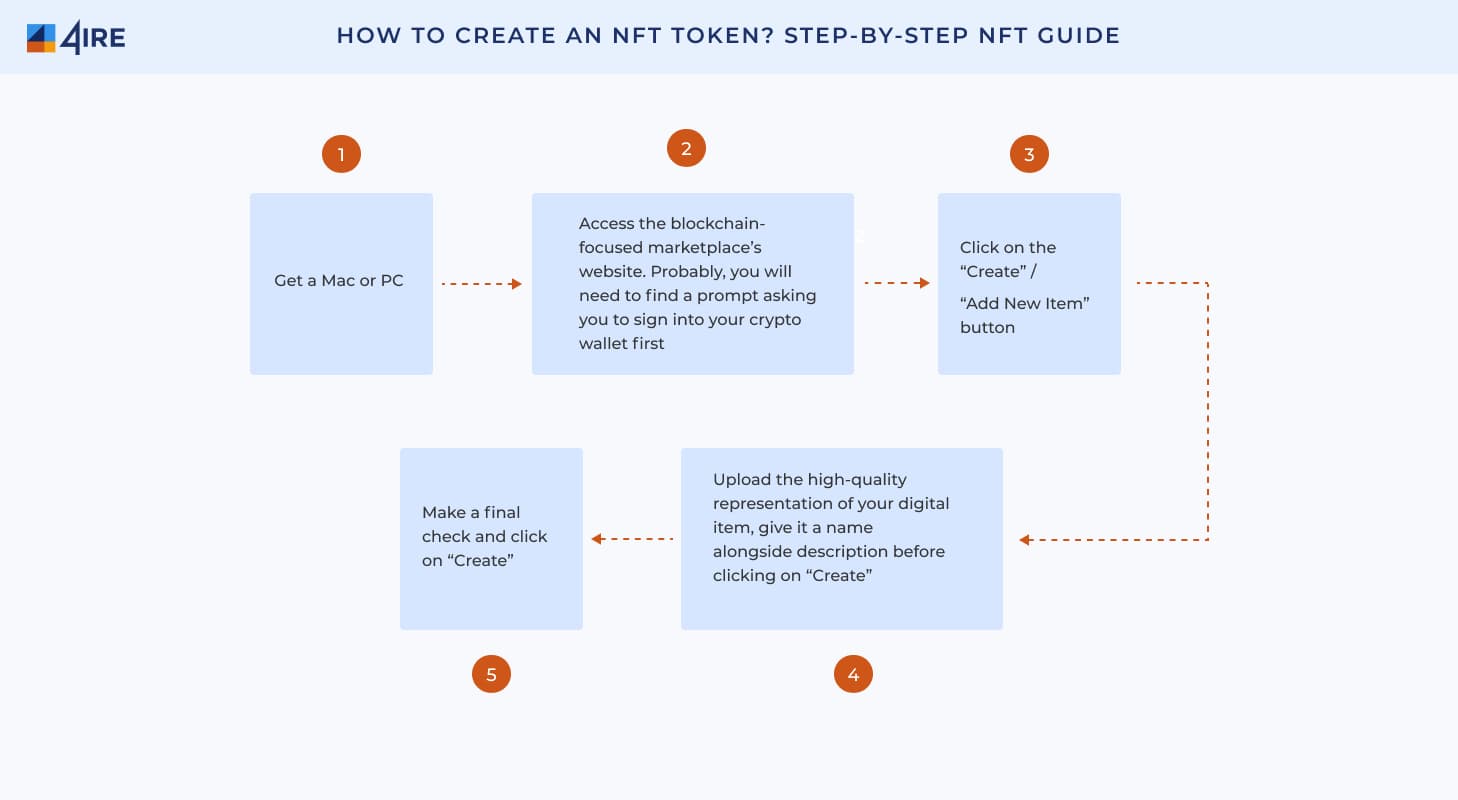
In a nutshell, the process of NFT generation includes the following steps:
- First, you need to be able to interact with the Ethereum blockchain to work on it. This can be done by setting up a Web3-enabled wallet. MetaMask is a convenient option as it is supported both as a mobile app and desktop software.
- Buy some ETH to pay the gas fees charged for using the Ethereum blockchain’s functionality. Some newer platforms, like Mintbase and OpenSea, have also allowed artists to mint NFTs without paying any gas fees.
- To create the NFT, you need to set up a collection that will hold your NFTs and then upload the visual, 3D, or audio content to it. Add a name and description to each file, also indicating how rare it is.
- Once your NFT is created, the platform will showcase it in its collection and will allow you to trade your assets.
Simple ERC-721 Tutorial for Your Use
Now let’s proceed to the technical part of the NFT launch, which relates to blockchain coding compliant with the ERC-721 standard. Here are the steps you need to take to create such tokens and make them livable on the blockchain.
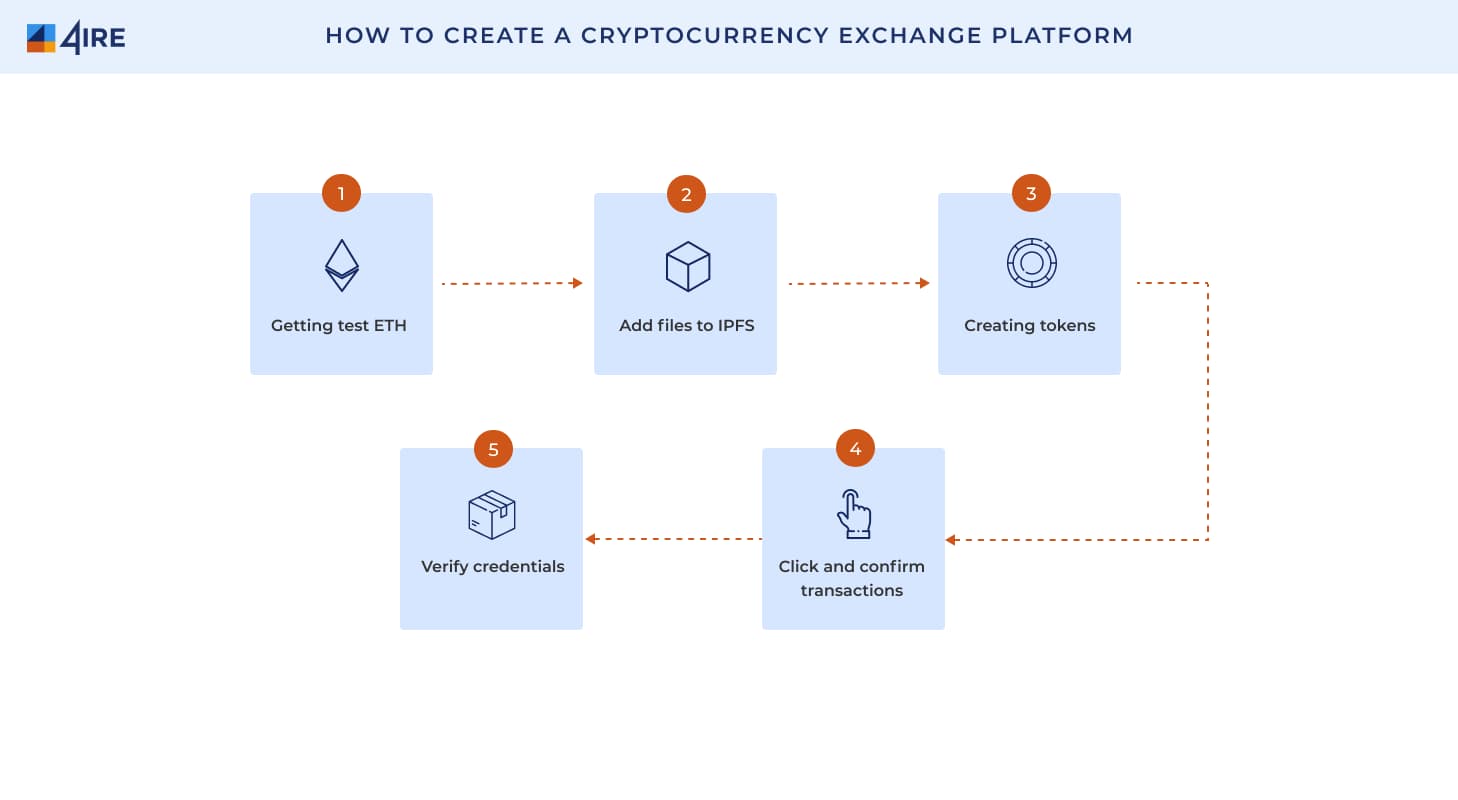
Test ETH
As ERC-721 tokens are created on Ethereum, you need to set up a test network. As we mentioned above, it can be done with the help of a MetaMask wallet to which you can receive test Ether to pay the gas fees.
IPFS Upload
The IPFS repository is the epitome of decentralization principles in the blockchain. It’s an acronym used to define the Peer-to-Peer File Storing and Sharing system to which every blockchain user can load their files. To starting using IPFS, you need to:
- Download IPFS to your device
- Complete the installation process
- Create an IPFS repo on your computer
- Launch the IPFS daemon and add the image you’re planning to tokenize into the IPFS terminal window
- Copy the hash that the database will generate for your NFT (start from Qm in the hash thread)
- Add a JSON file to the database by saving it in the same place where your image is located
Token Creation
Most coders develop ERC-721 tokens using the native blockchain programming language of Ethereum, Solidity. We won’t cover the coding details here – they are available in corresponding GitHub resources. Don’t forget to check the lines of the code you’re using for the following components:
- Type of SPDX license you’re using to avoid copyright troubles.
- The version of Solidity you’re using.
- Processes used to import ERC_721 contracts.
- New NFT generation code and token metadata.
- Data about the token’s name, its creator, and symbol.
- URI information and the NFT’s receiver’s address (the location for its storage upon creation).
- A command for token minting
- URI creation for a specific NFT and its storage in the corresponding JSON file.
Once these details are specified in the ERC-721 code, you will receive the newly minted token to the address you have provided.
Build Your Next ERC-721 Token with 4IRE
Interested in the innovation in blockchain development? Wishing to set up a new NFT or planning to create an NFT marketplace for monetization of traders’ activities? 4IRE can provide in-depth consulting and development services in all spheres of DeFi, blockchain, and FinTech. Years of experience and hundreds of effectively completed projects speak better than a thousand words about the expertise and professionalism you’ll get from our experts.
Learn more from us
 Ethereum news18 Jan 2022
How to Create a Stablecoin on Ethereum?
Stablecoins have gained much popularity in the crypto world due to their limited volatility. Read on to see how you can use stablecoins or create your own one.
Helen Petraschuk
 16 Mar 2021
Cardano Blockchain vs. Ethereum
Wondering which coin to invest in 2021? Learn more about Cardano and Ethereum - the leaders that attract investors worldwide, their benefits, and risks.
Vladislav Malynovskyi
 22 Sept 2020
NEAR protocol vs. Ethereum 2.0 Comparison
4ire Labs introduces NEAR Protocol, its benefits, and use cases as an official integrator. Learn more about this next-gen layer 1 protocol to reap its benefits early.
Vladislav Malynovskyi
FAQ
NFT creation is quite simple today with the use of ERC-721 token minting standards and Solidity. You need to have some ETH to cover the gas fees of Ethereum use and code the new NFT using one of the Solidity scripts.
Sending such a token requires getting permission from the Ethereum blockchain or, more specifically, from its authorized nodes. Thus, to sell your NFT (in other words, to complete the transfer of your ERC-721 token’s ownership), you need to click on the Edit button next to the image of your collection (or separate NFT) and indicate your wallet’s address to which you want to receive royalties for the asset. It would be best to stipulate the sum of royalties you want to get for the NFT.
Actually, any NFT built on the Ethereum blockchain is ERC-721 compliant. Otherwise, they will not be transferred on any popular NFT marketplaces like OpenSea or Binance.
The ERC-721 compliance standard ensures that the token can be transferred across any Ethereum-based blockchain. New blockchains emerged today to resolve the tensions associated with Ethereum overload (e.g., Polkadot), but they also use the ERC-721 standard to guarantee the universal interoperability of tokens.
Scale Your Business with Blockchain Excellence
Our team of skilled developers and strategic minds will collaborate with you to bring your project to life. Ready to take the plunge? Schedule a free consultation with our seasoned expert and let’s build the future together.